My wife, Anne-Marie, died in April last year. Since then, I have arranged four ceremonies to commemorate her life and passing: in Ottawa, in Tofino, BC, in Lidstone, UK (courtesy of Shahin Bekhradnia) and recently in Spiti, in the trans-Himalayas of northern India. That will be the last. Through engaging in this series of celebrations I have gradually rid myself of the enormous sense of loss and failure that descended on me immediately after her death. I still miss her greatly, but I now feel free to make what I can of the rest of my life without constant reference to the past.
The final event was accomplished in the company of a small group of friends: Angela Sumegi, Birgit Braune and Timothy Lash (all from Ottawa), Peter Cellik (Anne’s nephew, based in LA) and Sanjeeva Pandey (until recently a forest officer in Himachal Pradesh). I am most grateful to them for their companionship and support. Those of us who traveled from North America flew in to Delhi on 7 April and then traveled by train to Chandigarh and thence by car to Mandi and onward to Inner Seraj, in the state of Himachal Pradesh, where we trekked for a week in the area of the Great Himalayan National Park, enjoying the tranquility and beauty of spring in the remote Himalayan forests. After the trek, Peter had to return to LA but he was replaced by Sanjeeva who accompanied us on the rest of the tour. We traveled by car via Rampur, up the Sutlej River valley, through Kinnaur and, via a truly awesome road, into Spiti, a very remote part of the inner Himalayas lying up against the Tibetan border, circled by peaks more than 6000 m high, and inhabited by Tibetan-speaking people who practice Tibetan Buddhism.
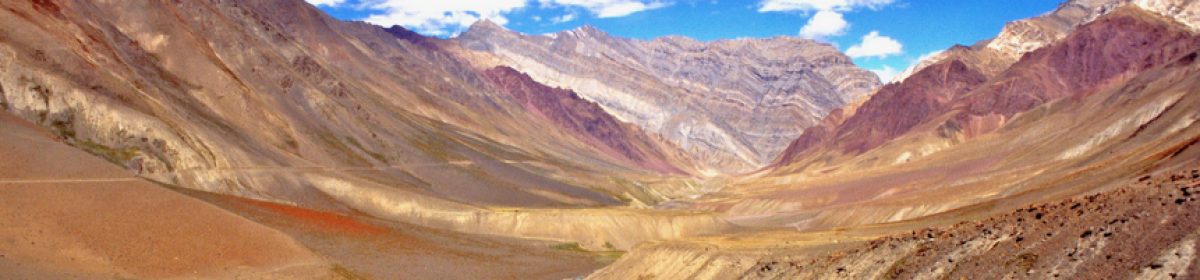
In Spiti, we divided our time between looking for wildlife and investigating Buddhist monasteries. On 21 April, almost exactly a year after her death, we held a small ceremony for Anne-Marie by the banks of the Spiti River at Tabo, the site of the oldest Buddhist Monastery in the region, and said to be the likely retirement home of the current Dalai Lama. Angela Sumegi said a short Buddhist prayer to the Goddess Tara after which we all recited the Tara Mantra (Om tare tu tare ture soha) 21 times, and then I cast some of Anne-Marie’s ashes into the river and Angela, with the help of our local guide, hung a prayer flag in a nearby tree. The ceremony for Anne-Marie, taking place in the cold windswept and barren scenery of Spiti and ringed by snow-capped peaks, was extremely moving for me: certainly more so than the other obsequies I have performed.
The event by the river was to have been the conclusion of the ceremonies, but Angela proposed creating tsatsa to incorporate the remainder of Anne-Marie’s ashes. Tsatsa resemble miniature temples and are formed out of clay, into which incense and the ashes of the deceased are mingled.This was done by an elderly lady – the grandmother of the family with whom we were staying. After a day in the sun, to dry out, the five tsatsa, a few inches high, were taken with us to Kee Monastery, the seat of the highest resident lama in the valley. Through a contact of Sanjeeva’s (his son has stayed in the area throughout the winter, working on his PhD project) we were able to obtain blessings for Anne-Marie’s tsatsa from a group of five lamas of Kee Monastery. The tsatsa were left at the monastery and the next day were to be transported into the nearby mountains, along with those of several local people. They were to be taken to a high and remote place where they would be deposited far from human view and where they will gradually return to dust. I feel that it is most fitting that a part of Anne-Marie returned to the mountains that she loved so much.
Spiti was chosen because Anne-Marie mentioned it shortly before she died as her favourite place in India. In a world that is increasingly accessible and subject to mass tourism, Spiti remains a genuinely remote and traditional area. The local people, although they carry cell phones, still till their fields with yak-drawn ploughs and haul themselves across rivers in little wooden cradles strung from wires. The road in and out is probably one of the most hazardous on the planet. We survived only because we had very careful drivers. I hope to return some day.

 Being ourselves