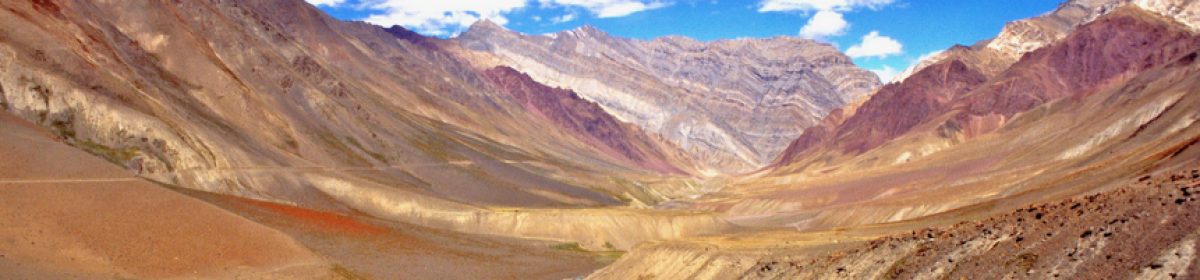
Changes in the birds of the Aladağğlar Mountains, Türkiye, 1965-2022
I compared recent eBird sightings (2011-2022) in the Aladağlar Mountains, Türkiye, with observations made in the 1960s. The Aladağlar form the highest part of the Taurus range and the western limit for some Asian mountain birds. Only the Eurasian Griffon Vulture Gyps fulvus has completely disappeared from the area, but Egyptian Vulture Neophron percnopterus, Peregrine Falcon Falco peregrinus, White-throated Dipper Cinclus cinclus and Wallcreeper Tichodroma muraria have become rare and Rock Dove Columba livia and Red-billed Chough Pyrrhocorax pyrrhocorax have probably diminished in numbers, whereas Blue Rock Thrush Monticolla solitaria and White-throated Robin Irania gutturalis have increased. I note some of the weaknesses inherent in using eBird records for this type of comparison. Despite the changes observed, no clear role for climate change can be discerned.
Wintering behaviour of House Sparrows in Ottawa
In Ottawa, in winter, House Sparrows typically occupy daytime roosts that contain anywhere from 5-100 sparrows. Such “sparrow camps” are usually situated in cedar hedges or in dense deciduous bushes, often right beside the street. They are more common in dense residential neighbourhoods (e.g. Sandy Hill) than in leafy suburbs with extensive gardens (e.g., Rockliffe). They usually persists throughout the winter and many are used year after year. During the 2020-2023 winters, I counted these “camps”) every few days between late November and the end of March. Numbers peaked in January and they had become small and intermittent by late March. Why they exist and why no other wintering birds act similarly are questions still to be answered.
Population change and nest tree longevity of a small-island population of Red-breasted Sapsuckers (Sphyrapicus ruber) breeding in old-growth temperate
rainforest
We recorded the population size and nest tree use of Red-breasted Sapsuckers (Sphyrapicus ruber) breeding in coastal, old-growth, temperate rainforest on East Limestone Island, Haida Gwaii, British Columbia, over 31 years (1990–2020). The populations density on the 48 ha island ranged from 10 to 46 occupied nests/km2, with numbers increasing and then decreasing from 1991 to 2005, followed by a gradual increase between 2006 and 2020. The population size was unaffected by a major windthrow event in 2010 that destroyed about a third of the preferred forest type. Nor did breeding birds avoid the remaining trees left within the blowdown area, suggesting that the retention of isolated dead trees within small forest openings may provide useful breeding sites for sapsuckers. Individual trees were used up to 10 times and continued to be selected for up to 21 years after first use, with use being more prolonged for Sitka spruce (Picea sitchensis) than for western hemlock (Tsuga heterophylla). Maximum span of use probably exceeds 23 years. There was a significant tendency for trees to be used in consecutive years. Modeling the availability of trees used at least once suggested that in all years there were ample suitable trees available, and hence that the population was not constrained by lack of suitable nest sites.
An unusual influx of Short-tailed Shearwaters into nearshore waters of southern British Columbia in 2021
An unusual influx of Short tailed Shearwaters Ardenna tenuirostris occurred in British Columbia marine waters in 2021 with concentrations of thousands of birds in the Blackfish Sound region of eastern Queen Charlotte Strait and hundreds, possibly thousands, in the northern Salish Sea. Birds began to arrive in mid August, built to a peak in mid September and were mostly gone by early November. Most records were very close to shore and there is a strong likelihood that birds moved to the Salish Sea from Queen Charlotte Strait via Discovery Passage—an unusual route for an otherwise pelagic seabird. We make some tentative comments on possible causes of the influx.
Seabirds on Kakabia Island, Indonesia, May 2022
By the standards of colonies elsewhere, the numbers of seabirds breeding on Kakabia Island is small. Moreover, none of the species breeding there is considered to be globally threatened. However, as one of a very small number of such colonies in Indonesian waters, it deserves serious protection as the extirpation of colonial seabirds from only a few islands could cause a significant range contraction for the species involved. On our visit, we saw no signs of serious threats to the breeding seabirds, although de Korte & Silvius (1994) mention the presence of rats, almost certain to be present where a fishing camp exists. De Korte (1989) referred to possible exploitation of phosphate (guano) deposits on the island, something that occurred in the early part of the twentieth century (de Korte & Silvius 1994). Mining would create a significant threat to most species, but there was no evidence of any such activities at present. Continued monitoring of seabirds at this site appears warranted.
An unusual influx of Short tailed Shearwaters into nearshore waters of southern British Columbia in 2021
Given the sightings and specimens from the eastern Beaufort Sea and central Canadian Arctic, small numbers of Short-tailed Shearwaters may already have made their way through the Northwest Passage to the North Atlantic. We anticipate that more opportunities for such transits will arise in the future as open water continues to spread through the waterways of the Canadian Arctic Archipelago in late summer. It is also possible that Short-tailed Shearwaters have reached the North Atlantic by travelling west from the Bering Sea (we are currently researching this option). Moreover, given current scenarios for a completely ice-free Arctic Ocean in late summer in coming decades, it seems inevitable that Short-tailed and other seabirds will travel across the ‘Canadian Arctic flyway’ and the western route with increasing frequency.
Marine Bird Surveys in Queen Charlotte Strait
Queen Charlotte Strait, a funnel-shaped passage extending ESE from the open waters of Queen Charlotte Sound, separates northern Vancouver Island from the mainland of British Columbia. It is connected, via Johnstone Strait, Discovery Passage and associated channels, with the more or less enclosed waters of the Salish Sea. Anecdotal information suggests that this area supports a high diversity of marine birds in winter and during the periods of northward and southward migration. In addition, this area is important for marine mammals, being used regularly by the Northern Resident Orca stock, and by Humpback and Minke Whales, Dall’s and Harbour Porpoises and Pacific White-sided Dolphins, and supporting several permanent haul-outs of Steller’s Sea Lions. This report covers surveys carried out over the period 16 August – 1 October 2020 and constitutes the first detailed account of fall migration of marine birds through the area.
Great Himalayan National Park
In Oxford in the 1970s, I got the idea for a broad survey of wildlife and ecosystems in the Western Himalayas: something that up to that point had never been attempted. With two of my fellow graduate students – Mac Hunter and Peter Garson – I set about planning and raising funds. In UK, the World Pheasant Association was an early backer and they supported me to make some reconnaissance surveys in 1978, for which Anne-Marie and I based ourselves in a one-room flat on the roof of a house near the centre of New Delhi.
To get official sanction for the project, I made the round of relevant ministries of both State and Central governments. The great Salim Ali, a towering figure in Indian conservation, and Duleep Matthai of WWF-India both lent their support. Eventually, after nearly two years of frustratingly slow progress, but with the determined assistance of Nalni Jayal, then the Secretary for Forests in Govt of India, I had all the permissions required. The Zoological Survey of India sent personnel; the State government allowed us to use rest houses and told their forest staff to assist us; Bombay Natural History Society sent a representatives and the Mountaineering Institute in Manali lent equipment.
The main surveys took place from October 1979-October 1980, with work carrying on through the winter, using snow shoes to access high altitudes, but with a hiatus in Jun-August for the monsoon rains. We were incredibly naïve at first, but gradually learned to tap into the experience of local hunters and poachers. Methods were primitive because in many areas we could only move on existing trails, so systematic surveys were impossible, but the broad patterns of wildlife distributions became clear and seemed to relate strongly to the activities of migrant graziers. Where their flocks passed through in large numbers wildlife densities were generally low. Where they did not visit, or where their visits were brief, wildlife was generally more abundant.
At the end of the year, at the request of the State Government, we recommended one area as the most promising for the protection of biodiversity. It encompassed a group of steep-sided valleys from which no passes led across the mountains to summer pastures beyond the monsoon. We were able to show that the abundance of wildlife in these valleys was the highest of any areas we surveyed and also that the vegetation showed less sign of browsing by domestic stock than elsewhere. We proposed that the area should be given the highest priority for protection in the Himalayan front ranges of Himachal.
Within four years the State had announced a National Park based on our recommendation and although it took another 15 years to settle all the local rights and transfer the small hamlets within the park to adjacent areas, the final result is very close to what we envisaged in 1980. The area was officially named the Great Himalayan National Park in 1984 and has recently (2014) been given IUCN World Heritage status. The recent publication, “The Great Himalayan National Park: the struggle to save the Western Himalayas” tells the story of its creation and gives an account of the people and wildlife that inhabit the area.

Arctic Ocean Islands
The Island archipelagos of the Arctic Ocean support the most extreme examples of Arctic-adapted plant and animal communities. Compared with much of the planet, they have seen relatively little human disturbance. Their current faunas and floras have been strongly influenced by the degree of isolation of the different island groups and by Pleistocene glaciations and post-Pleistocene sea-level changes. Faunal interchange with adjacent continents has been modified by the annual connection via winter sea-ice. Current trends towards warmer temperatures and shorter sea-ice seasons in the Arctic may eventually result in the loss of seasonal ice-bridges, isolating some archipelagos and preventing colonization by southern faunal elements. Understanding and protecting these islands is the key to preserving the current remnants of the Pleistocene fauna and flora.
Nest site characteristics of cavity nesting birds
We describe a 29-year study of tree species, nest site characteristics, and fledge dates of cavity-nesting birds on a small island in Haida Gwaii, British Columbia (BC). Seven cavity-nesting bird species were documented on East Limestone Island and 463 nests were found in 173 different trees. Nest trees were significantly taller and had a greater diameter than a random sample of snags. Tree height did not differ among bird species but diameter at breast height was larger for trees used by Brown Creeper (Certhia americana) than for other species. Cavity-nesters selected tree decay classes 2–7 (all dead/near dead [snags]), with 85% in decay class 4 (35%) or 5 (50%), similar to the random snag sample (class 4, 32%; class 5, 42%). Cavity height ranged from 2.6 to 44.9 m and for all species, except Brown Creeper, the mean nest height was >60% of the mean tree height. Nest heights were generally greater than observed elsewhere in BC. Nest cavity orientation was random except for Red-breasted Sapsuckers (Sphyrapicus ruber), for which only 13% of the cavity entrances faced southeast. Median fledging dates ranged from 7 June (Chestnut-backed Chickadee [Poecile rufescens]) to 28 June (Northern Flicker [Colaptes auratus]). Estimated median dates of clutch completion were similar for all species. Our results show that large snags provide habitat for a high diversity of cavity-nesting birds on Haida Gwaii.
Rise of the Corvids, Trail & Landscape
Not everyone is aware, but Corvids are making a bid for global supremacy and they have chosen Ottawa as their rallying point. Although numbers of ravens and crows in Ontario and Quebec are ostensibly static or growing only slowly, in Ottawa they are surging. It is possible that they had advanced knowledge of Coronavirus-19 and its threat to decimate humanity. They are simply waiting to pounce when we are weakened and distracted. It is worth noting that the common corvid in lowland Britain, the Carrion Crow, is named Corvus corone. Coincidence… I don’t think so!
Humpback Whale (Megaptera novaeangliae) observations in Laskeek Bay, western Hecate Strait, in spring and early summer, 1990–2018
Abstract
We describe observations of Humpback Whales (Megaptera novaeangliae) made along the west side of central Hecate Strait, British Columbia, during the spring and summer of 1990–2018. From none in March, the frequency of sightings increased from early April to a peak in May, then fell in June with few in July. The frequency of sightings during the peak period (1 May–20 June) increased over the course of the study at a mean rate of 6% a year, similar to increases recorded elsewhere in British Columbian waters. The frequency of sightings was highest in years when the Oceanic Niño Index for January–March was low and peaked earlier in years when the Oceanic Niño Index was high. Both of these relationships suggest a connection between Humpback Whale sightings in western Hecate Strait and the larger oceanographic context, with sightings more frequent in years of lower water temperatures.
Birds of Mansel Island
A recent review of bird distributions in Nunavut demonstrated that Mansel Island, in northeastern Hudson Bay, is one of the least known areas in the territory. Here, current information on the birds of Mansel Island is summarized. A list published in 1932 included 24 species. Subsequent visits by ornithologists since 1980 have added a further 17 species to the island’s avifauna. The list includes 17 species for which breeding has been confirmed and 10 for which breeding is considered probable. The island seems to support particularly large populations of King Eiders (Somateria spectabilis) and Tundra Swans (Cygnus columbianus) and the most southerly breeding population of Sabine’s Gull (Xema sabini) and Red Knot (Calidiris canuta; probably).
 Being ourselves