
Wednesday 27 May, 2026: Ottawa-Daajing Giids
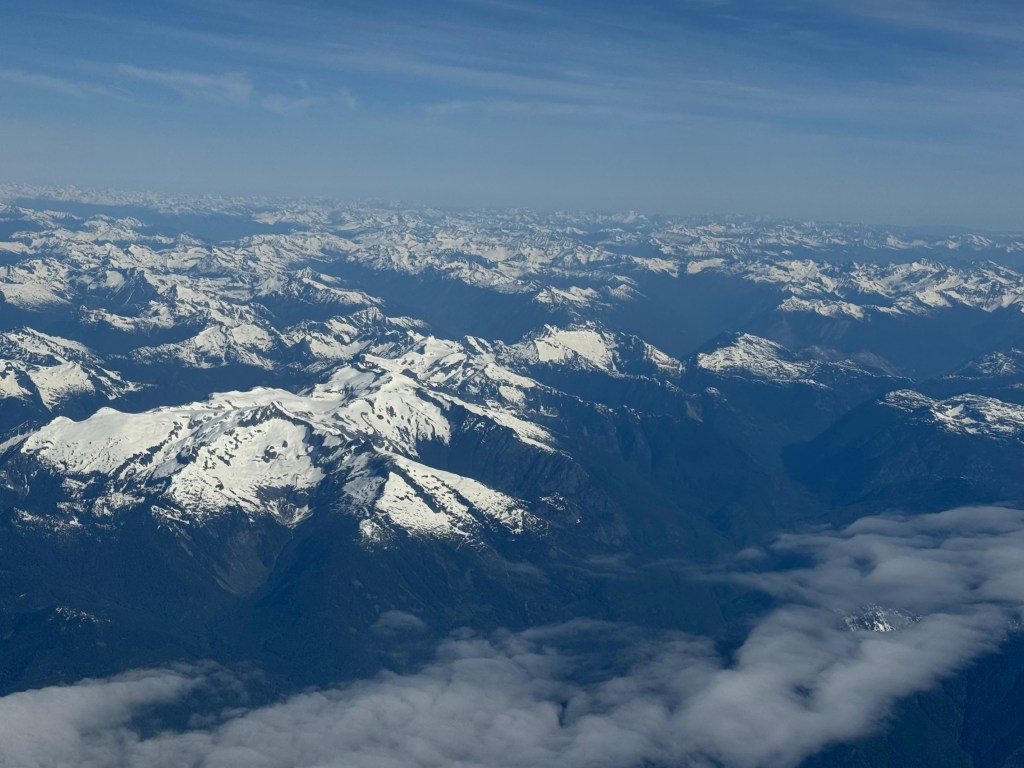
I’m sitting looking out across Vancouver Airport to the snow capped Rockies in the northern horizon. Weather here looks great and my flight to Sandspit is showing on time. Can’t wait to get back to Limestone Island…
This will not be a daily blog because we have no internet access in camp, so the entire thing (however much or little I manage to report) will be posted after I leave the field on 12 June.
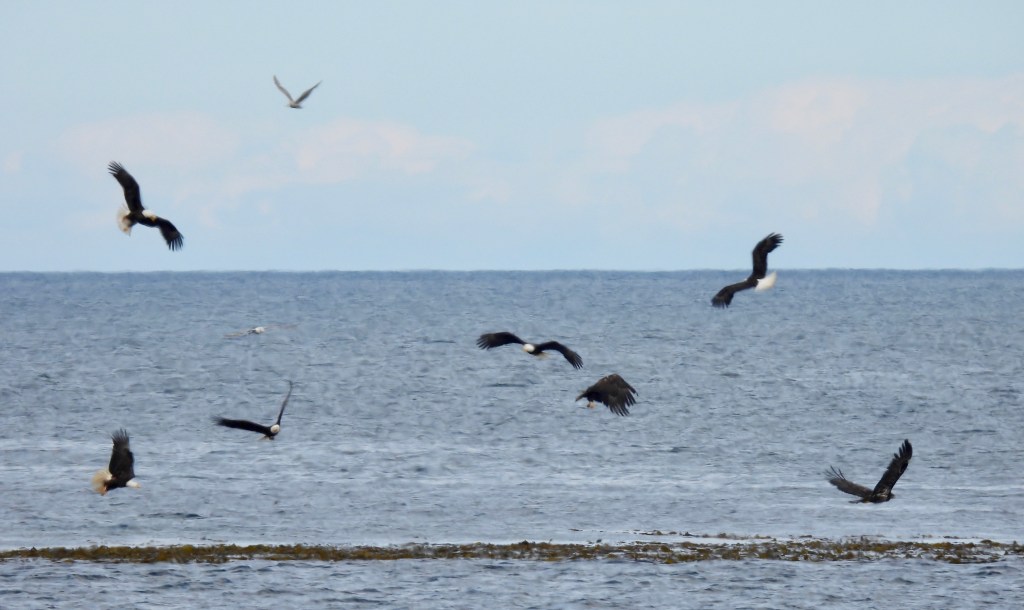
Made it to Sandspit on time and reached Keith’s place at 6 pm: 17 hours after I got up today in Ottawa. Could have been worse… Several grey whales and a dozen or so bald eagles circling a fish shoal seen from the ferry. Weather seems mild.
29 May, Friday; travel Daajing Giids – East Limestone Island
Picked up at 8:50 in Daajing Giids by James Hilgemann who has a very comfortable truck for the rough road to Moresby camp. Thanks to the comparatively good state of the logging road, we arrived half an hour before the boat and wandered about admiring the swallows nesting in the Parks’ shelter at the boat ramp. Finally, the ELI boat hove into view and we were soon greeting the inbound crew, on their way back to civilisation and loading on our own gear for the trip down.
Sea conditions were good for the first part of the trip, but it rained hard at times and, with the raindrops hitting at 20 knots thanks to the speed of the boat, it was hard to see anything. The latter half of the trip, a short chop arose with the boat banging up and down on the little wave-crests in an annoying manner. Jeanne, the driver, managed to keep the worst of the spray off us, but we arrived somewhat wet and more than a little cold. In addition, the sea was not calm enough to allow disembarkation at camp, so we had to unload in Boat Cove, a half kilometres very humpy walk from the cabin. My large roller bag proved too much for me and I had to pass it to younger members: Oh, the debilitations of time! Bring on the dancing robots, etc…
30 May, Saturday; East Limestone Island
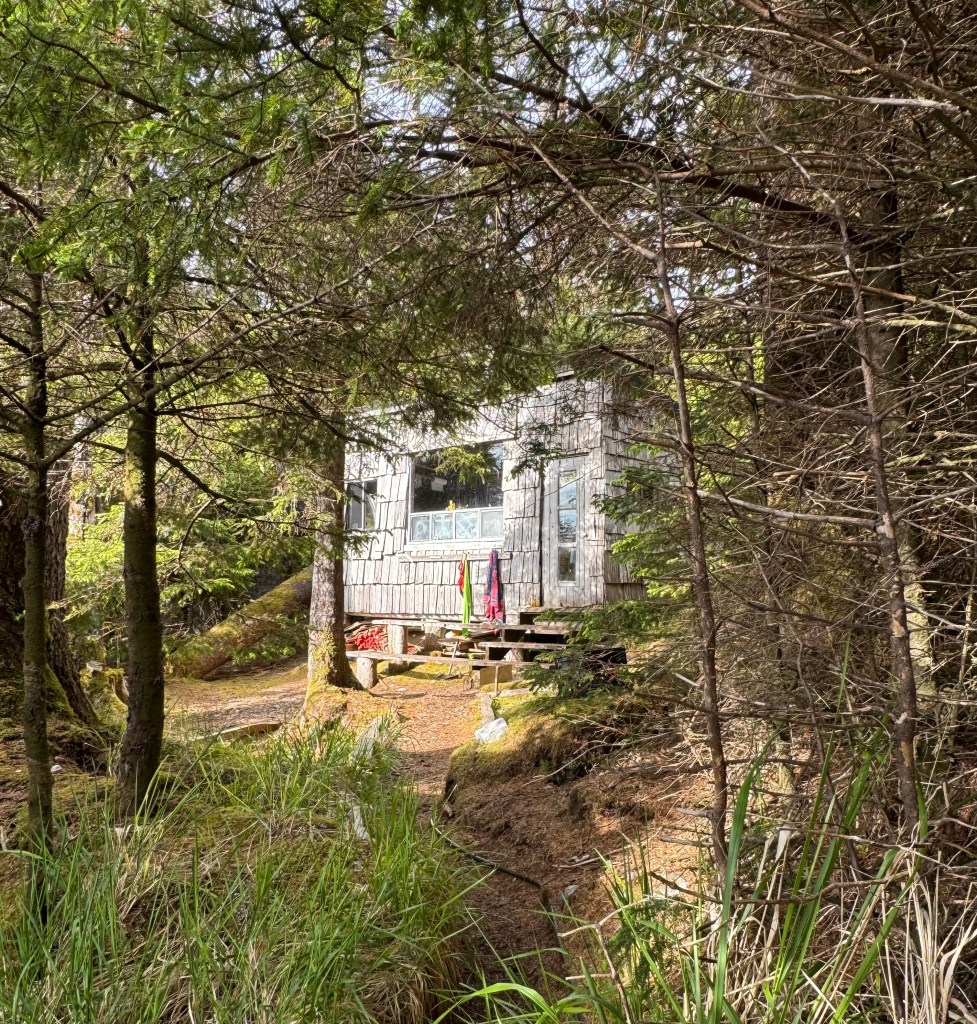
An orientation day for the new volunteers: in addition to myself, Emily and Solomon (13), mother and son. I did a sea-watch from the lookout blind from 7-8 am, picking up a few distant humpbacks, blowing after the habit of their kind and a couple of harbour porpoises, the least exciting dolphins, in my opinion, although others differ on that topic. A few dozen Pacific loons passed in flight, some going north, some south. Some were milling about on the water, too. It seems that these Arctic breeders can’t make up their minds whether to go or stay. Later, I watched a couple of wildlife trees to determine whether there were sapsuckers at home, scoring a yes and two nos. Then back to the lookout for another hour of scanning the horizon for whales, this time with slightly more success, seeing up to five spouting away off in Hecate Strait. Excellent vegetable souffle for dinner, courtesy of Jeanne, our assistant biologist.
31 May, Sunday; East Limestone Island
A peerless morning – calm and sunny with only whispy clouds on the horizon. With no chop on the sea it was possible to see about 500 Ancient Murrelets performing their strange courtship rituals far off on the far side of South Low Island. Humpbacks were easy to see as well. Right in front of the blind there were 97 Pigeon Guillemots and 5 Marbled Murrelets: a very satisfactory sight.
Rian took the crew to Reef and South Low islands to check for Black Oystercatcher nests, but I elected to remain on island and continue looking at wildlife trees, finding one that had not been noted previously. On a calm sunny morning there is no more pleasant employment than sitting on a suitable log, watching for sapsuckers, while being serenaded by the rest of the local avifauna (Swainson’s Thrush, Dark-eyed Junco, Orange-crowned Warbler, etc…). Back to the lookout at 4.30 for another sea-watch, but very little activity this time: even the loons seem to have moved on. Solomon caught a ling cod for dinner which I am now anxiously awaiting, having forgotten to eat lunch!
1 June, Monday; ELI, songbird counts, wildlife trees
Another fine morning when I got out about 4.45. We began with songbird counts, starting at 5.30, but the songbirds did not get the memo and the chorus was rather thin: probably most are incubating eggs right now. I only participated in one count as it became obvious that my lack of hearing in one ear disqualified me from judging distance and direction. After that, I did a sea-watch from the Lookout and saw exactly the same array of whales as we saw yesterday, including the mother humpback and calf that has been doodling about in Laskeek Bay for a couple of weeks. Very few seabirds!
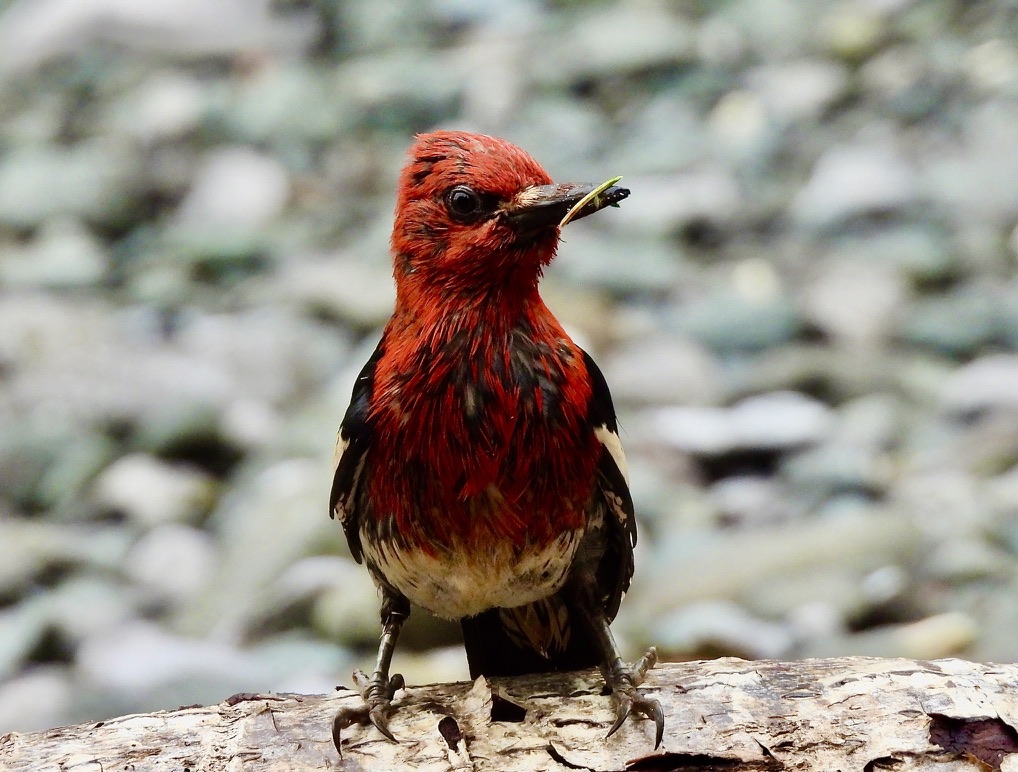
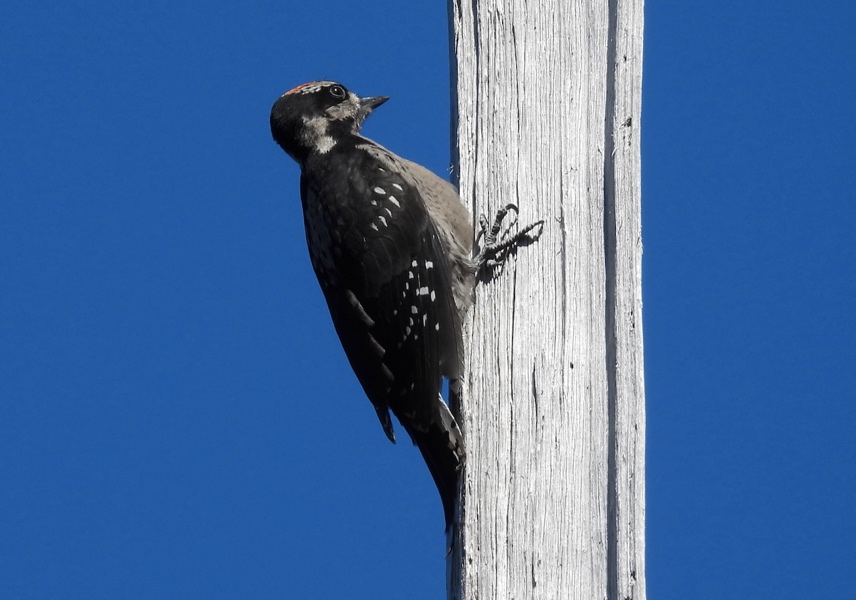
After breakfast we all dispersed to watch wildlife trees to determine whether they are occupied and by what: I managed to find a brown creeper nest under some peeling bark in the same tree where a Chestnut-backed Chickadee is using an old sapsucker hole. However, the sapsuckers led me a chase, teasing me by flying persistently to the same tree, but with no sign of a hole. I was lucky enough to get some pictures of a juvenile Hairy Woodpecker – the population in Haida Gwaii is regarded as a separate sub-species and, indeed, the birds here are clearly much darker than those in Eastern Canada. Took a nap after lunch before continuing the search for wildlife trees. Excellent lentil soup for supper, courtesy of our intern, Logan.
2 June, Tuesday: watch from Lookout Blind, plant inventory
Up at 6 for coffee and away to the Lookout for a 7 am start. The pattern seems fairly consistent from day to day, with small numbers of Humpback Whales gracing the horizon with their blows and a scattering of Pacific loons and Pelagic Cormorants winging their way past. A very tall blow close to Low Island suggested a possible Fin Whale, but no part of the animal was visible so the sighting classifies as “aspirational”.
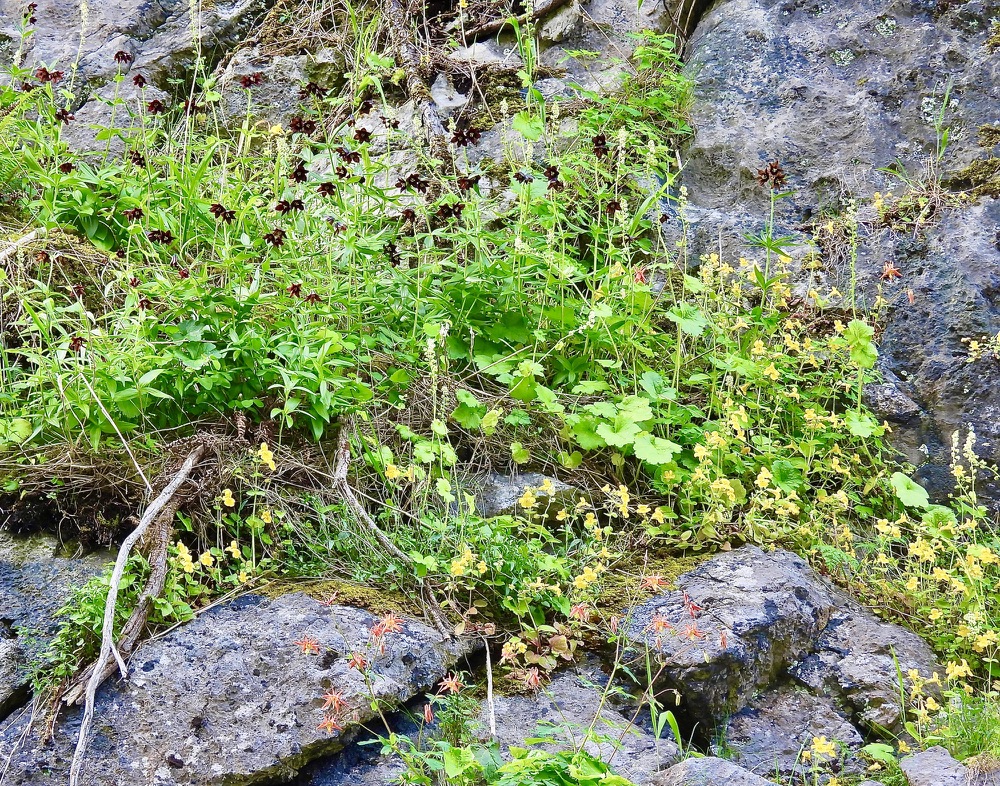
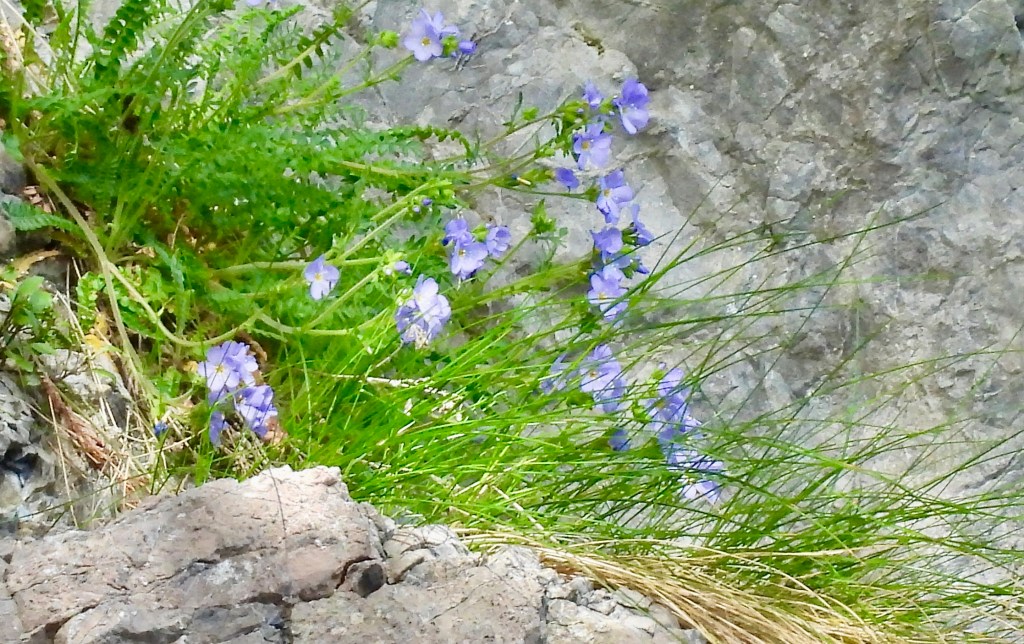
After breakfast, I checked the flowering plants in Anemone Cove – named after the Cutleaf Anemones growing there – their only station in Haida Gwaii – rather than the sea anemones in the tidepools. The south side of the cove, moist and shaded, supports a veritable flower garden of mixed monkey flower, red columbine, fringecup and riceroot, while the north side cliffs support the eponymous amemones, including one clump bearing at least fifteen flowers – the best display either I or Rian can remember. In the nearby Boat Cove, the Showy Jacob’s Ladder (another rarity hereabouts) lived up to its name with a burst of lilac-coloured flowers. Altogether, a very delightful display. On the way home, I set up a netting enclosure around two fine Coral-root Orchids, in the hopes of keeping the deer from eating them before they seed. Our small clump of Rein Orchids has already been flattened by the deer plague. Somehow, we can’t resist gardening, even where we are trying to “conserve the ecosystem”.
3 June, Wednesday; nominally a holiday
Non-working days, once a week, are supposed to allow people time for working on their personal interest, but as most people come to East Limestone Island to learn about the research here, down days tend to be a bit aimless and wind up being “more of the same, just a bit less”. My turn to cook and I did my usual camp meal of curried lentils with rice. Everyone tucked in and there were many compliments, although it is hard to tell to what extent the enthusiasm is driven by hunger, rather than true gourmet appreciation. Anyway, the pan got scraped clean – always a good sign.
4 June, Thursday; more wildlife trees, more sea watches
I did two sea watches today; one at 7 am and the second at 4 pm. The results were very similar. I am beginning to think that we have a small number, perhaps half a dozen, of humpbacks in the Laskeek Bay area and that they roam around more or less at random, sticking their tails, flippers and snouts out periodically just to say, “still here!” The occasional leap out of the water, followed by a huge splash, enlivens things, but otherwise one humpy fin or fluke looks very much like another. The lack of seabirds, apart from the ubiquitous Pigeon Guillemots, is a little surprising, but this is June, generally a low period for migration in our area. An Ancient Murrelet hit my tent the other night and the same has happened to other people, so they are still prospecting, apparently. Rian produced baked potatoes and roasted cauliflower for dinner – highly esteemed by all.
5 June, Friday; change-over day, and cross Hecate transect, day 1
Rian left at 7 am with the boat in order to get the tide for passing through Louise Narrows. This channel, an “inside passage” behind Louise Island to our landing spot at Moresby Camp, was dredged about 60 years ago. However, last winter some sort of natural event, possibly involving a minor local earthquake (there were several last winter), caused the passage to be partially blocked. It is only passable now at high tides. This is causing some annoyance to local tourist boats because the passage is very useful when seas are high on the outside of Louise Island. It also constrains our movements during the weekly crew change.
Today, Emily and Solomon are leaving. Solomon has a soccer tournament to engage in and Emily has to get back to her teaching job. Jeanne is exchanging with Jesse, our other assistant biologist: they take turns working in camp and working back in town on data input and analysis. I plan to leave at 10 for a trip across Hecate Strait to look for seabirds far offshore. There will be four of us, including Captain Jake Pattison of the good ship Whimbrel in which we shall be travelling. Having built the boat himself, Jake knows all about it! Seas were running at state 4 (white-caps) yesterday, so we were hoping that the forecast of a calm day would come to fruition.
Sadly, the sea did not calm off a lot. Jake arrived at Boat Cove to pick me up and we crossed to the Skedans Islands to figure out a plan of action. After some dubious guessing about what the weather would do, we decided to go for it and started out eastwards about mid-day, heading for the Bonilla Island light station – the only habitation on the island. In the event, the crossing involved no hazardous incidents, but a good deal of spray hit the main observers (Carita Bergman and Kaiden Bosch). Luckily, as recorder, I was perched behind them and caught some shelter from the weather.
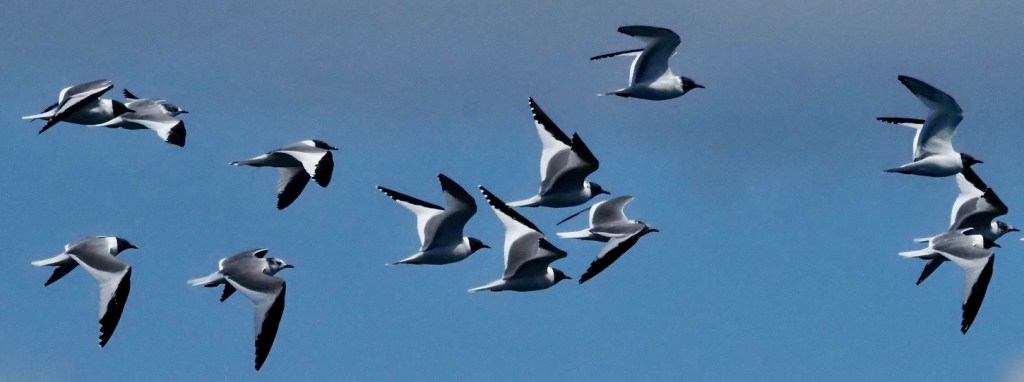
The bouncy state of the sea made observations, especially with binoculars, tricky but we did manage to see about ten species of seabirds, including the rare and very beautiful Sabine’s Gull. We saw two small flocks amounting to 38 birds. Interestingly, they included six birds in partial winter plumage. That plumage is not seen on the Arctic breeding grounds, so their presence among migrants in Hecate Strait was a surprise. The most numerous bird seen was the Sooty Shearwater, of which we counted about 400, some moulting their primary feathers. The normal assumption is that birds seen in BC waters originate from breeding colonies of millions in New Zealand, although this surmise is supported by only a small amount of tracking data. Sooties also breed on islands off southern South America, so a due south option is also possible, although those are thought to provide the hundreds of thousands that appear in the boreal summer in the North Atlantic. Still a few things left to find out…
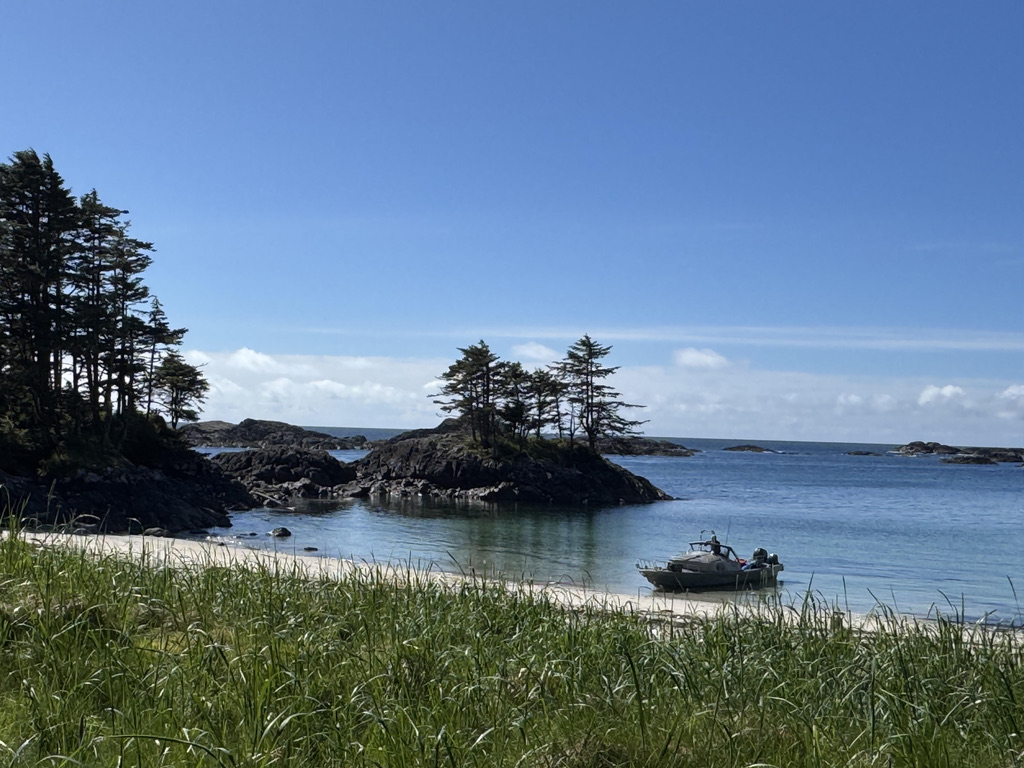
We reached the lagoon behind the Bonilla Island light station about 5 pm and were happy to go ashore are frolic on the sands and the beach logs after the constant pitching of the boat. After supper (chili, courtesy of Carita), picnicked on the beach, Kai set up a small tent while Carita slung a hammock between two trees. Jake and I slept in the small forward cabin on Whimbrel that has space for two more-or-less adult sized berths. Quarters were close, but in the event we both slept very well and if we snored apparently the other did not notice.
6 June, Saturday; return across Hecate Strait
Morning brought much better weather, with almost no wind and the sea nicely flattened. We all had breakfast and coffee on the Whimbrel and set off at 8 am on the return transect, heading for Reef Island at the south edge of Laskeek Bay. This was a far more pleasant crossing and we saw dramatically higher numbers of most species (except shearwaters), including two Northern Fulmars which counts as an “oo-ah!” species here at this time of year. We also saw many family parties of Ancient Murrelets, mostly comprising two adults and two chicks, as well as many groups of only adults, either flying or on the water. Ancient Murrelet was today’s most numerous bird.
After completing the transect we called briefly at the old Reef Island camp site and checked on Jean-Louis’ cabin, which remains in fine shape and, should anyone be passing, is still well-equipped with cutlery, plates, bowls and pots: perfect for a latter-day Robinson Crusoe. I reached Boat Cove, Limestone Island by 2.30 and was napping by 4. A most satisfactory conclusion to the voyage.
7 June, Sunday; morning checking wildlife trees, afternoon writing logs and, of course, napping
Tom and Deb, the new volunteers, joined me for a watch from the lookout 7-8 am but conditions were bad, with visibility partially obscured and a big sea running out in Hecate Strait: good we got in yesterday. Next, pancakes, followed by watching wildlife trees and investigating the flora of a couple of our exclosures, where we are trying to see what happens in the way of blowdown regeneration if deer are kept off. The effect is a not-unexpected array of otherwise deer-sensitive plants. However, in the long run the results will probably be similar everywhere: dense young spruce becoming taller and less dense over time and eventually, perhaps a century or two in the future, being blown down so that the cycle begins all over again.
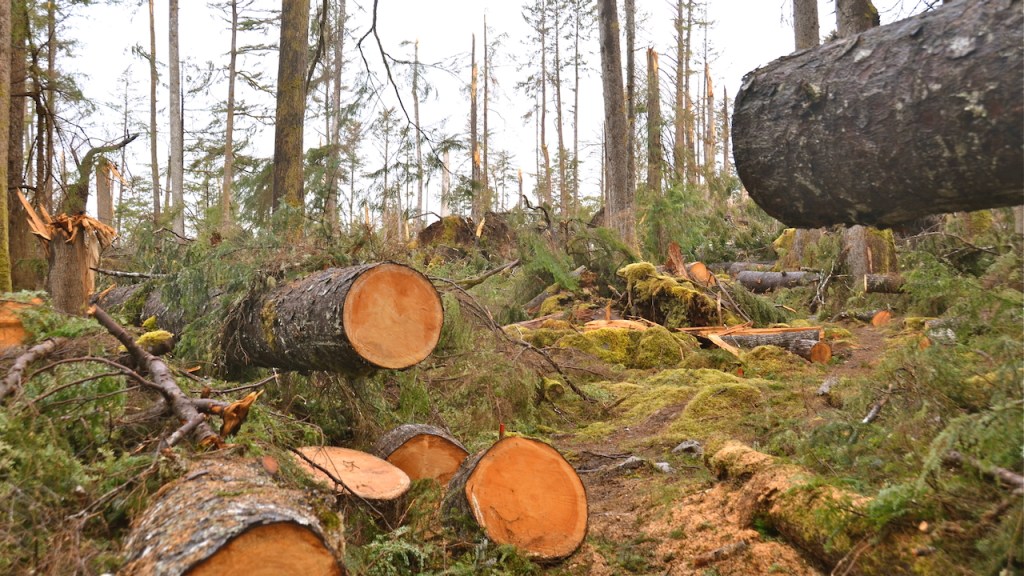
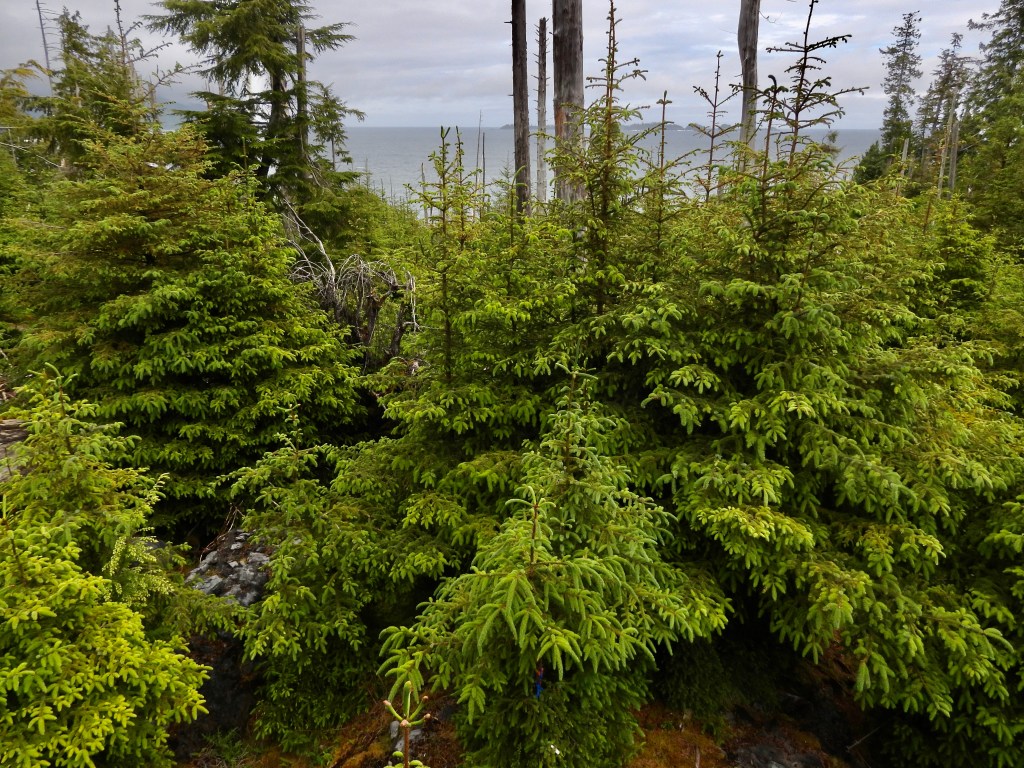
The history of shrubs on this island must be one of feast and famine. The interior of the island was practically devoid of deciduous shrubs prior to the major blowdown in 2010, save for a few clinging to the tops of stumps or on vertical cliff faces. A combination of heavy shade below the mature forest and browsing by the deer apparently prevented any development of a shrub layer. The blowdown created a massive injection of sites inaccessible to deer, in the form of fallen trees, upturned root-wads and broken stumps. These were colonised by shrubs with amazing rapidity, foremost being Red Elderberry, Salmonberry, Thimbleberry and the annoyingly difficult to identify members of the current genus, Ribes. Red Elderberry came up everywhere, but more on the ground, where tiny bonsai huckleberries may have been lurking ever since the last windthrow event. Presumably, the colonisation of the fallen logs and root-wads was accomplished by bird-spread seeds, although some root wads probably retained soil with dormant seeds enclosed.
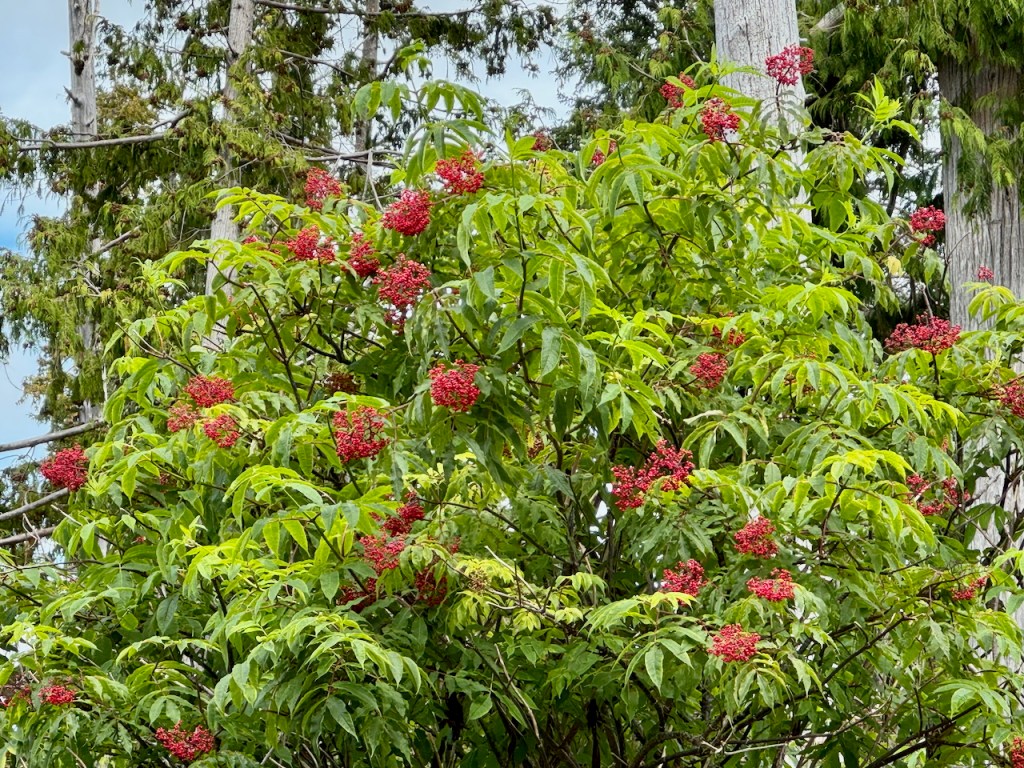
Now, 16 years after the event, the shrubs that flourished on fallen trees are not looking quite as healthy as before. For the most part, they are not yet overshadowed by spruce. It is possible that they have accomplished their mortal span and are looking to give space to their offspring. If so, they may be responding to the typical duration of such shrubby outbursts: their fruits broadcast by birds and squirrels, they may be anticipating the fallow years ahead. What sort of world will they find the next time the forest turns over? Hopefully, one as beautiful as today’s.
12 June, Friday; departure from Limestone Island
After returning from the Bonilla Island trip it was back to whales, sapsuckers and flowers on Limestone Island. More great food was consumed, more fine sights were seen. Your correspondent somehow staggered on. After a lovely calm return trip to Moresby camp, I spent the night with Greg and Astrid, long-time friends in Daajing Giids, before departing for Ottawa on the Saturday. Once back in Ottawa, it took me a while to recover from this excellent but exhausting trip, which accounts for why the blog is being posted so late. Next time, I will take my own mattress!


